
“Dr. Bergin at Chiromed Wellness Centers is the best chiropractor in town. I no longer have to take pain meds. If you still have pain, you’re not seeing to best chiropractor.”

Service
Spinal Decompression
in Lakeland and The Villages, FL
Computer-controlled traction for disc and nerve pain, without an incision. If the table is not the right answer for your spine, Dr. Bergin will tell you at the first visit.
- 22 years in practice
- Non-surgical
- $47 new patient exam
- 22 years in practice
- $47 new-patient exam
 Medically reviewed by Dr. Justin Bergin, DC Updated September 14, 2026
Spinal Decompression at ChiroMed
The word surgery gets said out loud at some point, usually by someone looking at a scan rather than at you. Before that came the anti-inflammatories, the stretch sheet, possibly an injection, and a great deal of advice about lifting. Meanwhile the leg pain still wakes you at three in the morning and you have quietly stopped doing several things you used to do without thinking. Decompression exists for exactly that gap. Dr. Justin Bergin, DC has spent 22 years working this part of the ladder, and it is one of the most useful tools in [our pain control clinic programmes for disc and nerve cases](/disc-nerve-rehab/).
This page sits under pain control clinic, the ChiroMed pain control clinic pillar.
What spinal decompression actually does
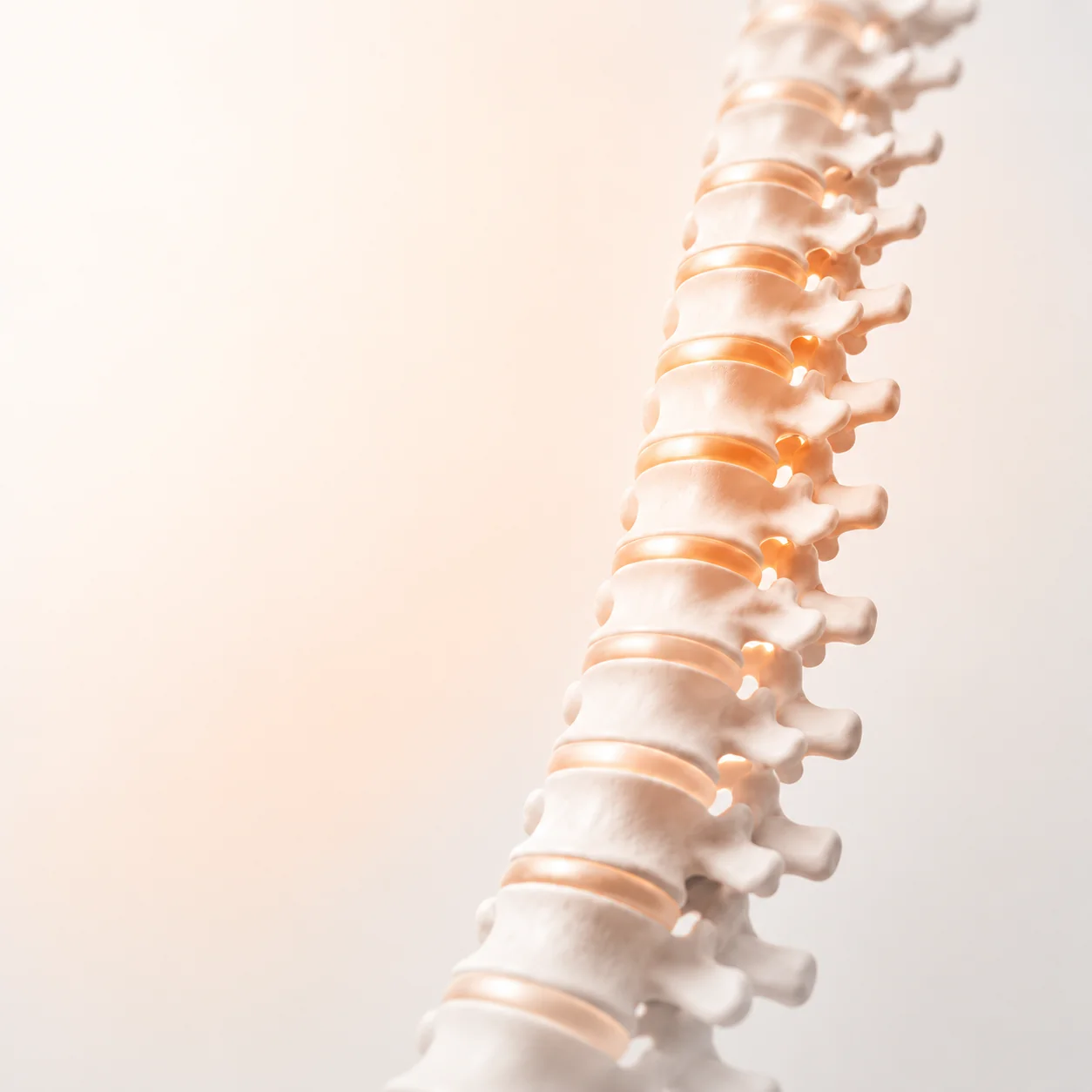
Spinal decompression is a non-surgical traction therapy. You lie clothed on a motorised table in a padded harness while a computer applies and releases a precise pull along the spine. The cycles gently separate two vertebrae, lowering pressure inside the disc between them and easing load on a compressed nerve root.
The mechanism is pressure. A disc under sustained compression pushes outward, and where it pushes into the channel a nerve root travels through, you feel it in an arm or a leg rather than in your back. Cycled traction lowers the pressure inside the disc for the duration of the pull, and the working theory is that this gives the outer disc wall a chance to draw material back in while fluid and nutrients move into a structure that has almost no blood supply of its own. The client's own published description of this therapy calls it FDA-cleared, and that phrase has a specific meaning worth knowing before you weigh it. The FDA explanation of what a 510(k) clearance certifies is that a device was found substantially equivalent to one already legally on the market. Useful, honest, and a different standard from FDA approval. It says something about the device. It says nothing about whether it will work for you. What decides that is the examination. Decompression influences two things: pressure inside a disc, and space around a nerve root. If your pain is generated by those two things, you are in the group that tends to respond. If your leg pain is actually coming from the hip joint, the sacroiliac joint, the piriformis, a peripheral nerve entrapment or a vascular problem, the most sophisticated table in Florida will do nothing for you. This is the whole reason decompression has a mixed public reputation. It gets prescribed off a scan finding rather than off a physical examination that matches the scan to the symptom, and disc bulges turn up on the scans of plenty of people who have no pain at all. So the sequence here is examination, then matching, then treatment, with a scheduled re-check to test whether the bet was right. If the leg pain has not moved and the neurological findings have not improved by that date, you get a different plan or a referral. That is the honest version, and it is why we occasionally talk a patient out of a service we sell.
Background reading from an independent authority: the FDA explanation of what a 510(k) clearance certifies.
Conditions we treat with it
Each of these has its own page, and each one links back up to this service. The examination decides which of them applies to you.
Why patients choose it
No recovery period
You get off the table and drive home. There is no wound, no scar tissue, no anaesthetic and no weeks of restricted activity built into the treatment itself.
Nothing is permanently altered
Fusion changes how the segments above and below behave for the rest of your life. Decompression leaves every later option exactly where you found it.
It treats the segment, not the signal
The traction is aimed at the mechanics producing the nerve irritation, rather than at masking the pain while the load on the disc stays exactly the same.
Progress is measurable
You are retested against the same neurological and orthopaedic findings taken at the start, so there is an objective answer to whether this is working for you.
Cost, insurance and financing
Clinics price decompression very differently, and any figure quoted to you over the phone before an examination is a guess about a spine nobody has looked at. These are the things that actually move your number.
The one published price
Consultation, Exam, X-Rays (If Needed) & Report of Findings: Only $47
What moves the cost
- Whether your plan contributes to decompression or treats it as non-covered
- Whether the lumbar spine, the cervical spine or both are being treated
- The length of the course of care set at the report of findings
- Whether supporting therapy such as laser, soft tissue or shockwave is included
- Whether imaging is needed before starting
What a course includes
- Consultation with Dr. Justin Bergin, DC
- Orthopaedic and neurological examination
- X-rays if they are clinically indicated
- Report of findings with a scheduled re-examination date
Payment: Spinal decompression is mixed payment. Some plans contribute and many treat it as non-covered, so the front desk verifies your specific benefit before you commit to a course. Medicare coverage varies by plan and by service, and our front desk will tell you exactly what applies before you commit to anything. Every new patient starts with the consultation, exam, X-rays if needed, and report of findings for $47. Payment plans are available for self-pay care. Ask the front desk which plan fits your course of care.
Why ChiroMed
Twenty-two years, two Central Florida offices, and a concierge model that buys you the appointment length a disc case needs. The difference you will feel is that decompression is not the only thing in the building. Chiropractic adjusting, knee decompression, Omniwave shockwave, Neuromed electroanalgesia and regenerative, metabolic and functional care all sit on the same plan led by Dr. Justin Bergin, DC, which means the table can be one component of your care instead of the entire product. Clinics that sell decompression alone have one answer to every spine. Patients who arrive here because of a disc usually find their case has more than one moving part, and [how disc and nerve rehabilitation is run at this practice](/disc-nerve-rehab/) shows how those parts get sequenced rather than stacked.
Where you would be treated
A course of decompression means coming back, so the drive matters. Suite 13 on S. Florida Avenue is a straight run for patients in Highland City, Scott Lake, Christina and Grasslands, and the Polk Parkway and Harden Blvd approaches keep the trip short from most of Polk County. The Lady Lake office sits on North US-441 just above CR 466, which is the easy side of the intersection for anyone driving down from Summerfield or across from Lake Sumter Landing, Oxford and Wildwood. Retired patients throughout Lake, Sumter and Marion counties use that office for their decompression visits.
In Lakeland that is 6595 Florida Ave S, Suite 13, Lakeland, serving Polk County. In the Villages market the office is at 929 US-441 #404, Lady Lake, serving Lake County, Sumter County, Marion County. Dr. Justin Bergin, DC performs the examination personally at both, 22 years into practice.
This page links up to its parent hub only: pain control clinic.
Compare your options
Real alternatives exist, including ones this practice does not perform. Here is the honest set.
| Criteria | Our approachSpinal decompression | What it is | Typically considered when | Invasive? | Offered at ChiroMed? |
|---|---|---|---|---|---|
| Spinal decompression | Computer-controlled cycles of traction that gently separate two vertebrae | Disc-related back, neck or leg pain with a nerve component that has not settled with basic care | No | Yes | |
| Chiropractic adjustment | A specific, directed force applied to a restricted joint | Mechanical pain and stiffness without a significant disc or nerve component | No | Yes | |
| Omniwave shockwave therapy | Acoustic pressure waves into the surrounding soft tissue | The muscles, tendons and ligaments supporting the segment are the limiting factor | No | Yes | |
| Physical therapy and loaded rehabilitation | Progressive exercise to change how the spine tolerates load | Strength and endurance are the gap, or a decompression course needs holding in place | No | Supporting rehabilitation is provided here. A full physical therapy course is a separate referral | |
| Epidural or nerve-root injection | Steroid delivered near an inflamed nerve root under imaging guidance | Severe radiating leg or arm pain that has not responded to conservative care and matches the imaging | Minimally | Not performed here. Appropriate when the pain is disabling and a specific nerve root is confirmed on imaging | |
| Discectomy or fusion surgery | Surgical removal of disc material, or fusion of the segment | Progressive weakness, loss of bladder or bowel control, or a confirmed lesion that has failed everything conservative | Yes | Not performed here. Some spines genuinely need it, and you will hear that from us rather than a longer care plan |
Every option above is legitimate for the right patient. The last two are not offered at this clinic, and we would rather send you to them at the right moment than keep you on a table that has stopped helping.
Is spinal decompression right for someone like you?
Candidacy is decided at the examination, not on a web page. These are the general lines.
Likely a good candidate if
- Leg or arm pain that follows a line and is worse than the back or neck pain itself
- A diagnosed bulging or herniated disc on a scan you already have
- Pain that eases when you lie down and returns within minutes of standing
- Numbness or tingling in a limb with no measurable weakness
- You want a serious attempt at conservative care before considering injections or surgery
We will point you elsewhere if
- Loss of bladder or bowel control, or numbness in the saddle region, which needs an emergency department now
- Measurable, progressive weakness such as a dropping foot
- Spinal hardware, a fusion, or surgical implants in the segment to be treated
- Advanced osteoporosis, a spinal fracture, or a tumour or infection of the spine
- Pregnancy, or a known abdominal aortic aneurysm
When we’re not the right answer, we say so , and connect you with someone who is.
Your first visit
What to expect, step by step
You know the plan and the cost before anything begins.
-
 01
01Consultation and examination
History, orthopaedic and neurological testing, and a careful look at any imaging you already have. Dr. Bergin is checking whether your symptom pattern genuinely matches a disc, because plenty of leg pain does not.
-
 02
02Report of findings
You are shown what was found and told whether decompression is a reasonable bet in your case. Where it is not, you get the alternative rather than a sales conversation.
- 03
Treatment on the table
You lie clothed in a padded harness while the machine applies traction in slow cycles of pull and release, so the spine is never fighting a constant pull. Most people describe it as a stretch, and a fair number fall asleep.
- 04
Re-examination
You are retested against the markers taken at the start. If the leg pain is not changing and the neurological findings are not improving, the plan changes or you are referred on.
-
An adjustment that is not aimed at a specific finding is just noise. We treat what the exam and the X-ray tell us to treat.
“I have had sich a great experience seeing Dr. Bergin. When other offices have told me I just had muscle damage or the only thing they could do for me was give shots, he said he had others ways to manage my pain and numbness, along with improving mobility. And he was right! I feel so much better!”
“I have had pain in my right upper back quadrant by my shoulder blade for at least a year now and the doctors have been unsuccessful in making the pain go away. I came to Dr. Bergin looking for some help. Within 3 to 4 weeks. My pain in that area is completely gone.”
“Dr. Bergin is phenomenal. Chronic lower back issues led a different doctor to mention back surgery to me. That was not an option I wanted to entertain. After a consult with Dr. B, he was confident that he could help resolve my back issues. I’ve been seeing him weekly to resolve the issue, and I am so pleased with the results so far! More mobility, less pain, and a great customer experience.”
“I bless the day that Dr. Bergin started working on me. I have had long standing pain for so long. After just a few visits my pain left and I feel so good. He is very patient oriented and caring. I regard him highly.”
“Dr. Bergin was instrumental in relieving my back pain which I had for many years. The techniques he used on relieving my back pain were impressive. I been going to chiropractors for years and Dr. Bergin is the best.”
Get in touch
Book your spinal decompression evaluation
Tell us what the problem is and which office is closer. A member of the ChiroMed team follows up within one business day.
- 1
Send the form
Two minutes. Tell us what hurts and which office is closer.
- 2
We call you back
A real person, within one business day, to find a time that works.
- 3
Exam and answers
History, orthopedic and neurological testing, imaging on site when it changes the plan.
- $47 consultation, exam, X-rays if needed and report of findings
- Payment plans available on the self-pay programs
- 4.8 out of 5 from 225 Google reviews
- Choose Lakeland or The Villages on the form
Spinal Decompression questions
Tap a message for the honest answer. Call Lakeland (863) 940-3444
Does spinal decompression actually work?
For the right disc case it is a reasonable and well-tolerated option, and a good number of patients avoid escalating to injections or surgery. It is not universal. Decompression works on the mechanics of a disc and the space around a nerve root, so it helps most when your symptoms genuinely come from that, and it does very little when the leg pain is coming from the hip, the sacroiliac joint or a peripheral nerve. That is why the examination, not the table, is the part that decides your outcome.
the clinic teamHow do you know if your spine needs to be decompressed?
The pattern is fairly recognisable. Pain that travels down a limb along a defined line, symptoms that ease lying down and return on standing, numbness or tingling in a specific distribution, and imaging showing a bulge or herniation at the level that matches your symptoms. Dr. Bergin tests for that match with orthopaedic and neurological examination. Where the symptoms and the scan disagree, the scan is not the thing being treated.
the clinic teamHow much should spinal decompression cost?
Clinics price it very differently, and any figure quoted over the phone before an examination is a guess about a spine nobody has looked at. What determines your cost is whether your plan contributes, whether one region or two is treated, how long the course runs, and what supporting therapy is included. Our front desk verifies your benefit and gives you the full picture at the report of findings. New patients start with the consultation, exam, X-rays if needed, and report of findings for $47.
the clinic teamWill insurance pay for spinal decompression?
Sometimes partly, often not at all. Many plans classify non-surgical decompression as non-covered, while some contribute when it is delivered inside a chiropractic plan of care. Medicare coverage varies by plan and by service, and our front desk will tell you exactly what applies before you commit to anything. Where the answer is no, it is self-pay, and payment plans are available for self-pay care.
the clinic teamCan I decompress my spine permanently?
No, and nobody can. The spine is a load-bearing structure that gets compressed every day you stand up in gravity, so there is no permanent state to lock in. What is realistic is reducing the pressure enough for an irritated nerve to calm down, then keeping that segment healthier with strength, movement and periodic care. Hanging from a bar, an inversion table or a stretch at home can relieve symptoms briefly, but none of it produces the controlled, cycled traction a decompression course delivers.
the clinic teamWhat are the downsides of spinal decompression therapy?
Three are worth knowing. It takes a course of visits rather than one appointment, which is a real commitment of time. Coverage is patchy, so the cost often falls to you. A minority of patients feel more sore in the first week as the tissue responds, which usually settles. It is also unsuitable for some spines entirely, including fusions and hardware, spinal fracture, significant osteoporosis, pregnancy and an abdominal aortic aneurysm. The genuine risk is not the table. It is spending twelve weeks on the wrong treatment because nobody examined you properly first.
the clinic teamSame-week appointments
Find out whether spinal decompression is the right tool.
One examination tells you which discipline the problem actually needs.
- 4.8 out of 5 on Google
- $47 consultation, exam and report
- 22 years in practice
Consultation, Exam, X-Rays (If Needed) & Report of Findings: Only $47