
“Dr. Bergin at Chiromed Wellness Centers is the best chiropractor in town. I no longer have to take pain meds. If you still have pain, you’re not seeing to best chiropractor.”
Condition
Scoliosis treatment
in Lakeland and The Villages, FL
A curve in the spine is a structural fact. How much pain, stiffness and lost function it costs you is not, and that is the part we work on.
- 22 years in practice
- Non-surgical, no bracing
- $47 new-patient exam
- 22 years in practice
- $47 new-patient exam
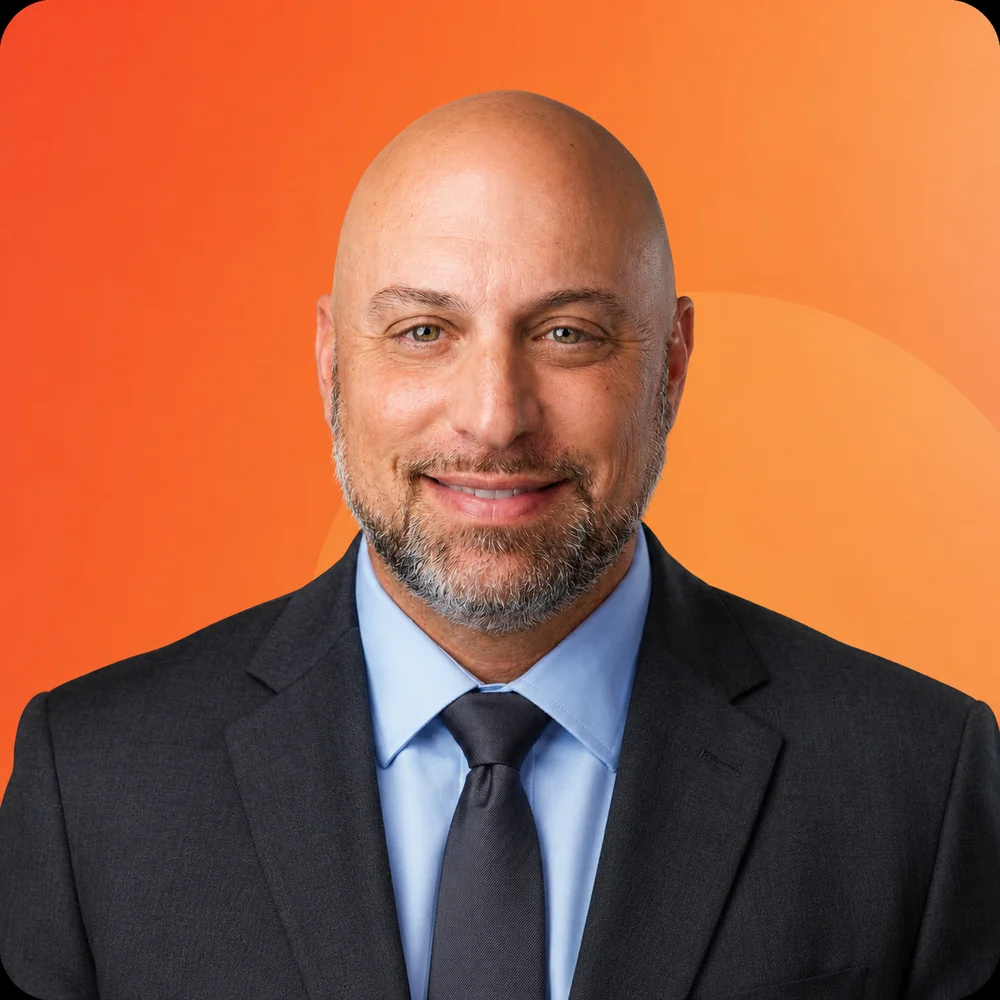 Medically reviewed by Dr. Justin Bergin, DC Updated September 14, 2026
Quick summary
Scoliosis is a sideways curvature of the spine. ChiroMed does not straighten a structural curve and does not brace or operate. What we treat is what the curve costs you day to day: the aching, the one-sided stiffness, the fatigue by evening and the movement you have quietly given up. Care is hands-on and non-surgical. The first visit, including exam and report of findings, is $47.
Understanding scoliosis
Scoliosis is a sideways curve of the spine, usually with some rotation in it. Curves are measured in degrees on an X-ray. The degree matters less to how you feel than how the rest of your body has compensated for it over the years.
Two things are happening in a scoliotic spine and they are worth separating. The first is the curve itself, which is structural: in an adult that shape does not get talked out of position. The second is everything the body built around it. Muscles on the concave side shorten and grip. Muscles on the convex side lengthen and fatigue. Certain segments stop rotating while their neighbours take double the work, and joints carry uneven load for years. That second layer is where the pain lives, and it is not fixed. It responds to hands-on care, to soft tissue work, and to changing how you load the spine.
Most adults who call about scoliosis were told about it decades ago, in a school screening or a routine X-ray, and then told nothing else. It did not hurt at twenty. It aches now. One shoulder sits higher in every photograph, standing through a round of golf or a long church service has become a negotiation, and the back is tired by four in the afternoon in a way sleep does not fix. Underneath the question sits a quiet fear about whether the curve is getting worse. ChiroMed will tell you honestly what a chiropractor can and cannot change about a curve, at the Lakeland office or the Lady Lake office serving The Villages.
Independent background: Scoliosis, Johns Hopkins Medicine.
Symptoms
Most people recognise their own version somewhere in this list. Each one maps to a specific finding the examination checks for.
- One shoulder or shoulder blade sitting higher
- A hip that appears higher on one side
- A rib or back prominence on bending forward
- An uneven waistline, or clothes hanging crooked
- One-sided back ache after standing or walking
- Back fatigue that builds through the day
- Reduced rotation turning one way
- Muscle tightness that always returns to the same spot
- Leg lengths that look different when lying down
Common causes
Idiopathic scoliosis
The most common form by far, usually first noticed in adolescence, with no identified cause. It is not something a parent did or a child caused.
Degenerative adult scoliosis
A curve that develops later in life as discs and facet joints wear unevenly. This is the version most Villages patients are dealing with, and it often arrives with stenosis symptoms alongside it.
A congenital difference in vertebral shape
Vertebrae that formed differently before birth produce a curve from the start. Management is orthopaedic first, and any hands-on care is coordinated around that.
Neuromuscular conditions
Where muscle control around the spine is affected by an underlying neurological condition, the curve follows. These cases belong with the treating specialist.
A functional curve from compensation
A leg-length difference, a long-standing hip problem or a guarded posture after injury can produce a curve that is not structural. Those often change substantially, which is why the examination distinguishes them.
How we treat scoliosis in Lakeland and The Villages
Care is aimed at the consequences of the curve rather than the curve itself: restoring motion to segments that have locked, releasing the tissue that has shortened on the concave side, and building tolerance so ordinary activity costs you less.
Chiropractic care for the segments that have stopped moving
In a curve, a handful of levels do almost none of the rotation and the neighbours do far too much. Specific adjustment returns motion where it has been lost. It does not reduce the measured curve, and we will not tell you it does.
Spinal decompression where a disc or a nerve is involved
Degenerative curves frequently come with disc narrowing and nerve-root crowding on the concave side. Where the examination shows that, computer-controlled decompression addresses the pressure directly.
Soft tissue therapy for the muscular asymmetry
The shortened side and the overworked side both need attention, and they need different things. Targeted soft tissue work is often what makes the adjustment hold, and it is usually what patients notice first.
What recovery usually looks like
Examination and measurement Your first two visits
Postural assessment, range of motion by segment, neurological screening, and imaging where it changes the plan. You see the findings before anything is recommended.
Settling the symptom The opening block of care
Early work targets the muscular side, because that is where relief comes quickest. Most people report the evening fatigue easing before the morning stiffness does.
Building tolerance As the plan progresses
Focus shifts to holding the motion that has been restored and loading the spine differently in the activities that provoke it. Visit frequency falls as tolerance rises.
Long-term management Ongoing, by choice
A curve is a lifelong structure, so some patients keep a periodic visit and others return only when it flares. We reassess rather than assume, and we say when care has reached its ceiling.
When to seek care sooner
Between visits, the things that help most at home are unglamorous. Keep walking, because standing still is usually harder on a curve than moving. Break up long sitting. Sleep with support under the side that hollows. Carry weight on both sides rather than always the same shoulder. Gentle rotation and side-bending both directions, daily, beats an intense session once a week. Some findings need a same-week opinion instead. Seek care promptly for a curve that is visibly worsening, new numbness or weakness in a leg, pain that wakes you every night, breathlessness on mild exertion, loss of bladder or bowel control, or a new curve appearing in adulthood without explanation. In a child or adolescent, a curve progressing during a growth spurt belongs with an orthopaedic specialist quickly.
Red-flag findings belong with a physician, promptly, and not with conservative care alone.
Cost, insurance and financing
Scoliosis care is priced by what the examination finds and how much of the plan is hands-on chiropractic rather than device-based work. The first visit is $47 and covers the consultation, exam, X-rays if needed and the report of findings.
The one published price
Consultation, Exam, X-Rays (If Needed) & Report of Findings: Only $47
What moves the cost
- Whether the curve is structural or functional, which changes the plan entirely
- Whether decompression is indicated alongside chiropractic care
- How much soft tissue work the muscular asymmetry needs
What a course includes
- The postural and neurological examination and the report of findings
- Reassessment of range of motion as the plan progresses
Payment: Chiropractic care at ChiroMed bills insurance, and our team verifies your benefits before your first visit. Medicare coverage varies by plan and by service, which matters to many of our Lady Lake patients, so the front desk confirms exactly what applies in advance. Payment plans are available for self-pay care.
Who you would be seeing
Dr. Justin Bergin, DC brings something to this condition that most clinicians do not: 22 years of practice and his own history with scoliosis and chronic pain. That history is why ChiroMed exists in the form it does, built deliberately to reject the rushed-appointment model he had been on the receiving end of. It also shapes how he talks about curves, with no promises about degrees and no scare tactics about the future.
Dr. Justin Bergin, DC, 22 years in practice, performs the examination personally and explains the findings before any program starts. Lakeland: 6595 Florida Ave S, Suite 13, Lakeland. The Villages market office: 929 US-441 #404, Lady Lake. Both offices run the same program.
Getting to us
Lady Lake patients reach the US-441 office from Spanish Springs, Lake Sumter Landing, Brownwood Paddock Square, Summerfield, Oxford and Fruitland Park, and the golf-cart routes around CR 466 make the trip straightforward for anyone who would rather not drive. Degenerative curves are common across the Sumter, Lake and Marion county retiree community. In Lakeland, the South Florida Avenue office draws from Highland City, Lakeside Village, Grasslands, Christina and the Harden Boulevard corridor, about fifteen minutes south of Lakeland Regional Health Medical Center.
Browse every condition on the conditions we treat index.
Options compared, honestly
This is treated very differently depending on who you walk in to see. Here is the full set, including the options this practice does not provide.
| Criteria | Our approachChiropractic care with soft tissue therapy | Curve-specific exercise programs | Rigid bracing | Pain medication | Spinal fusion surgery |
|---|---|---|---|---|---|
| What it is | Restoring segmental motion and releasing the asymmetric muscular load around the curve | Structured exercise designed around the curve pattern to build endurance and control | A custom rigid brace worn to limit progression in a growing spine | Anti-inflammatories or analgesics to reduce the symptom | Instrumented correction and fusion of the curved segments |
| Typically considered when | The curve is causing pain, stiffness or lost function and growth is complete | Endurance is the limiting factor, often alongside hands-on care | A skeletally immature patient has a curve at risk of progressing | Pain interferes with sleep or work while other care takes effect | The curve is severe or progressing, with neurological or cardiopulmonary consequences |
| Invasive? | No. Hands-on and non-surgical | No | No, though wearing it is demanding | No, though there are systemic effects | Yes. Major surgery with a long recovery |
| Offered at ChiroMed? | Yes, at both offices | Rehabilitative loading is built into the plan here | Not provided here. Appropriate for a growing spine with a curve at documented risk of progression, and managed by an orthopaedic specialist | Not prescribed here. Appropriate when a physician judges short-term symptom control necessary | Not performed here. Appropriate for severe or progressive curves, and that decision belongs with a spine surgeon |
We do not straighten curves and we do not pretend otherwise. If your curve is progressing, if you are still growing, or if there is neurological change, the right next step is an orthopaedic opinion and we will help you get one.
What to expect
From evaluation to a plan for your scoliosis
A course, not a single visit. The examination decides the length and the cost, and both are written down first.
-
 01
01Evaluation
Orthopedic and neurological testing, with imaging on site where it changes the plan.
- 02
Findings, in plain language
What the examination actually found, and honestly whether this is a case conservative care can help at all.
-
 03
03A written program
Which disciplines, how many visits, over what period, and what it costs. Decided before anything begins.
-
 04
04Reassessment as it runs
Function is re-measured through the course. If the response says the plan should change, it changes.
-
Find out what is actually driving it before choosing a program.
“I have had sich a great experience seeing Dr. Bergin. When other offices have told me I just had muscle damage or the only thing they could do for me was give shots, he said he had others ways to manage my pain and numbness, along with improving mobility. And he was right! I feel so much better!”
“I have had pain in my right upper back quadrant by my shoulder blade for at least a year now and the doctors have been unsuccessful in making the pain go away. I came to Dr. Bergin looking for some help. Within 3 to 4 weeks. My pain in that area is completely gone.”
“Dr. Bergin is phenomenal. Chronic lower back issues led a different doctor to mention back surgery to me. That was not an option I wanted to entertain. After a consult with Dr. B, he was confident that he could help resolve my back issues. I’ve been seeing him weekly to resolve the issue, and I am so pleased with the results so far! More mobility, less pain, and a great customer experience.”
“I bless the day that Dr. Bergin started working on me. I have had long standing pain for so long. After just a few visits my pain left and I feel so good. He is very patient oriented and caring. I regard him highly.”
“Dr. Bergin was instrumental in relieving my back pain which I had for many years. The techniques he used on relieving my back pain were impressive. I been going to chiropractors for years and Dr. Bergin is the best.”
Get in touch
Schedule your scoliosis evaluation
Tell us what you are feeling and which office is closer. A member of the ChiroMed team follows up within one business day.
- 1
Send the form
Two minutes. Tell us what hurts and which office is closer.
- 2
We call you back
A real person, within one business day, to find a time that works.
- 3
Exam and answers
History, orthopedic and neurological testing, imaging on site when it changes the plan.
- $47 consultation, exam, X-rays if needed and report of findings
- Payment plans available on the self-pay programs
- 4.8 out of 5 from 225 Google reviews
- Choose Lakeland or The Villages on the form
Scoliosis questions
Tap a message for the honest answer. Call Lakeland (863) 940-3444
Can a chiropractor straighten scoliosis?
No, and any clinic that says otherwise is selling you something. A structural curve is a fixed shape in an adult spine. What chiropractic care changes is the pain, the stiffness, the lost rotation and the muscular imbalance the curve has produced, which is what most people actually want back.
the clinic teamWhat is the best treatment for adult scoliosis?
For most adults it is conservative management: hands-on care to keep segments moving, soft tissue work for the asymmetry, and loading the spine well in daily life. Surgery is reserved for severe, progressing curves or neurological compromise. Choosing between them starts with an examination and current imaging.
the clinic teamDoes scoliosis get worse with age?
Some curves progress slowly in adulthood, particularly degenerative ones, and some stay stable for decades. Progression is measured on imaging over time rather than guessed from how you feel. If yours has changed shape or begun producing new neurological symptoms, that warrants an orthopaedic opinion.
the clinic teamShould I see a chiropractor or an orthopedic specialist for scoliosis?
It depends on the question you need answered. An orthopaedic specialist manages the curve itself, including bracing and surgical decisions. A chiropractor manages what the curve does to you. Many patients are best served by both, and we are comfortable working alongside one.
the clinic teamIs exercise safe if I have scoliosis?
For nearly everyone, yes, and inactivity is the bigger risk. Walking, swimming and controlled strength work are all reasonable. What to be careful with is heavy asymmetric loading and end-range twisting under load. The examination will tell you which movements your particular pattern does not tolerate.
the clinic teamWill insurance pay for scoliosis care here?
Chiropractic care at ChiroMed bills insurance and your benefits are verified before the first visit. Device-based additions such as decompression are handled separately and quoted in advance. Medicare coverage varies by plan and by service, so ask the front desk to check your specific policy.
the clinic teamSame-week appointments
Start with an examination, not a package.
Find out what is actually driving it before choosing a program.
- 4.8 out of 5 on Google
- $47 consultation, exam and report
- 22 years in practice
Consultation, Exam, X-Rays (If Needed) & Report of Findings: Only $47