
“Dr. Bergin at Chiromed Wellness Centers is the best chiropractor in town. I no longer have to take pain meds. If you still have pain, you’re not seeing to best chiropractor.”
Condition
Herniated Disc treatment
in Lakeland and The Villages, FL
A disc that has bulged or torn does not automatically mean an operation. Most respond to care that unloads the disc and settles the nerve it is pressing on.
- 22 years in practice
- Computer guided decompression
- Non-surgical
- $47 new patient exam
- 22 years in practice
- $47 new-patient exam
 Medically reviewed by Dr. Justin Bergin, DC Updated September 14, 2026
Quick summary
A herniated disc happens when the soft centre of a spinal disc pushes through a tear in its tougher outer ring, often pressing on a nearby nerve. That produces back or neck pain plus pain, numbness or weakness down a limb. Most cases improve without surgery. Dr. Justin Bergin, DC builds the plan around unloading the disc rather than around an operating table.
Understanding herniated disc
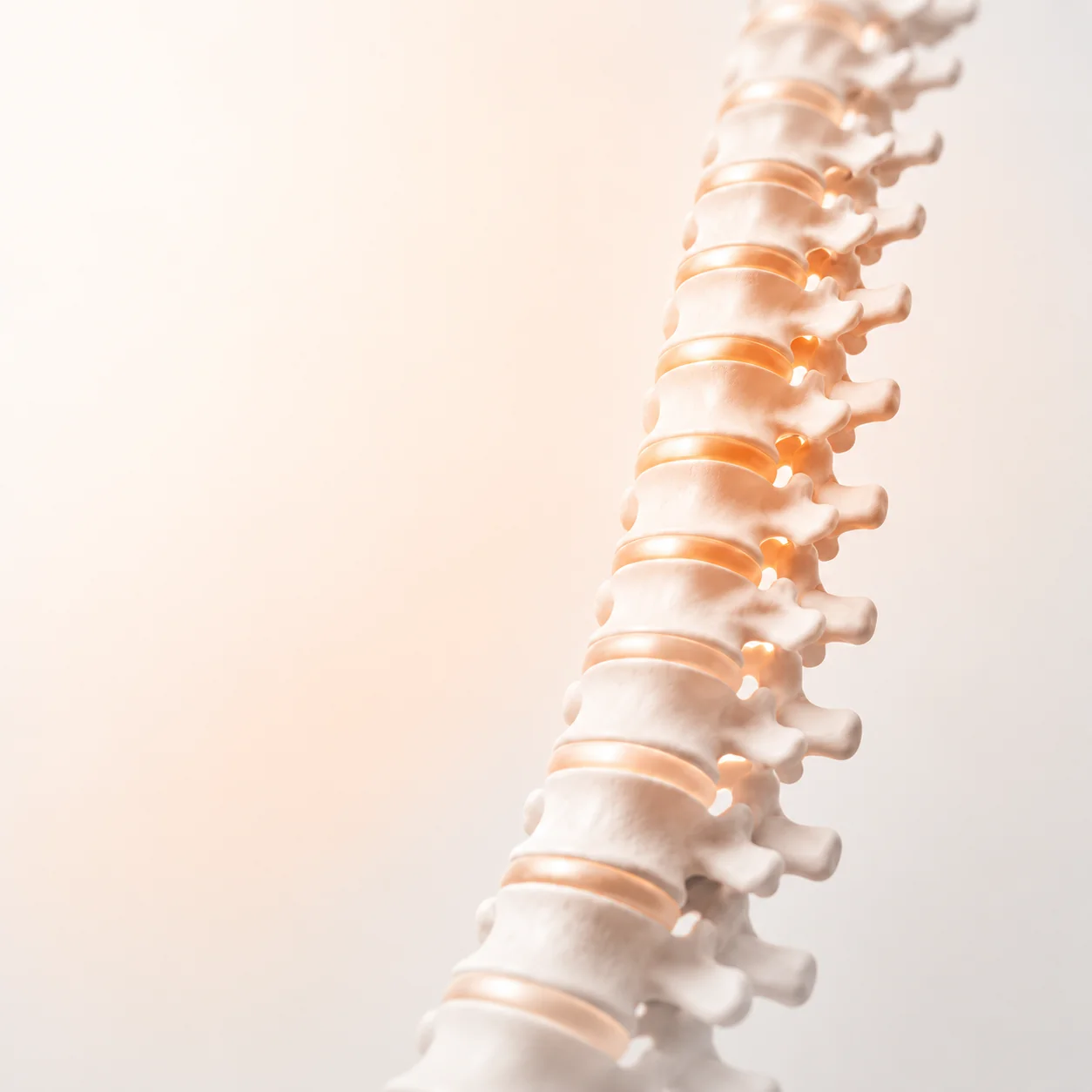
A herniated disc occurs when the soft inner material of a spinal disc pushes through a tear in the tougher outer ring. If that material contacts a nerve root it produces pain, numbness or weakness in the limb that root supplies, which is why symptoms are often felt far from the spine.
Each disc is built like a jam doughnut: a firm fibrous outer ring around a gel like centre that spreads load. Age and repeated bending dry that centre out and weaken the ring, and a tear lets the inner material move outward. Whether it hurts depends on where it goes. Material moving backward and to the side lands exactly where a nerve root exits, which is why herniations produce limb symptoms rather than simple back pain. Material moving somewhere with nothing important nearby can produce nothing at all, and scanning people without symptoms turns up herniations routinely. The encouraging part is what follows. Herniated material shrinks over time, inflammation around the root settles, and most people recover without an operation. Care speeds that and stops the disc being reloaded meanwhile. The exception is a nerve losing strength rather than merely hurting, which is a different problem on a different timeline.
The symptoms usually arrive in order. Something in the back goes, and within a day or two the leg starts talking: a line of pain down the back of the thigh, pins and needles in the foot, a patch of numbness on the outside of the calf. Sitting becomes the worst thing you do. Coughing hurts. Bending to put shoes on stops being possible. That pattern, spinal pain plus symptoms travelling down a limb, is what a disc herniation looks like from the inside, and it is what brings most people to ChiroMed Wellness Centers. Some arrive holding a scan report nobody explained. Others arrive before anything has been imaged. Dr. Justin Bergin, DC has 22 years of examining discs, and the first task is confirming which level is involved and whether the nerve is irritated or actually losing function. From there the plan is mechanical: computer guided decompression to take load off the disc, Neuromed electroanalgesia where nerve pain is severe, chiropractic care through the rest of the spine, and rehabilitation for patients who have already had disc surgery.
Independent background: Low back pain, National Institute of Neurological Disorders and Stroke.
Symptoms
Most people recognise their own version somewhere in this list. Each one maps to a specific finding the examination checks for.
- Back or neck pain with limb pain
- Numbness in a foot or hand
- Pins and needles down one limb
- Pain that spikes on coughing
- Worse symptoms on sitting
- Weakness in a leg or arm
- Loss of the last bit of bending
- Pain easing when lying down
- Symptoms following one specific line
Common causes
Age related disc drying
The gel centre loses water content over the decades, so the disc spreads load less well and its outer ring becomes more prone to tearing. This is the background to most herniations.
Repeated bending and lifting
Loading the spine in flexion over and over fatigues the outer ring. The herniation itself often happens during an ordinary movement after years of that.
A single heavy or awkward load
Lifting something heavy while twisted, or catching a falling weight, can tear the ring in one event. Patients usually remember the exact moment.
Prolonged sitting and driving
Sitting loads a lumbar disc more than standing does, and long driving adds vibration. This is why symptoms are so often worse after a commute or a long journey.
Trauma from a crash or fall
Collision forces can herniate a disc directly, in the neck as often as the lower back. Symptoms may begin days after the event rather than at the time.
Smoking and general conditioning
Smoking reduces blood supply to a structure that has very little, and poor trunk conditioning leaves the disc taking load the muscles should share.
How we treat herniated disc in Lakeland and The Villages
Disc care here is built on unloading the disc and calming the nerve it is irritating, then changing the loads that caused it. That means computer guided spinal decompression, Neuromed electroanalgesia for severe nerve pain, chiropractic care through the rest of the spine, and rehabilitation for those who have already had surgery.
Spinal Decompression for the Affected Level
This is the centrepiece of disc care here. The table applies controlled, cycling traction to the identified level, creating separation and reducing compressive load on the disc and the root beside it. Dr. Bergin sets the parameters from the examination and tracks whether your limb symptoms are retreating toward the spine, which is the sign the plan is working.
Neuromed Electroanalgesia for Severe Nerve Pain
When nerve pain is bad enough to prevent sleep, the mechanical work is hard to tolerate. Electroanalgesia delivers specific electrical waveforms into the tissue to interrupt pain signalling and improve local circulation. We use the Neuromed system, and it runs alongside the decompression plan. Cash pay protocol.
Chiropractic Care Around the Injured Level
The segments above and below a herniated level stiffen as the body protects the injury, and that stiffness keeps loading the injured disc. Adjusting restores movement there, with technique chosen to suit an acute disc rather than applied by default. This portion bills insurance, verified first.
Rehabilitation After Disc Surgery
Some discs do get operated on, and a microdiscectomy or fusion addresses the compression without addressing what loaded the disc in the first place. We work with post-surgical patients on movement, trunk control and mechanics, in step with what the surgeon has advised.
What recovery usually looks like
Calming the acute disc The opening phase
Load comes off and the provoking movements go. People usually report the sharp catch on movement fading before the limb symptoms do, with sitting tolerance the slowest to return.
Symptoms retreating toward the spine As the plan progresses
The pattern that matters is limb symptoms withdrawing upward, from foot to calf to buttock, rather than fading everywhere at once. That is tracked at each reassessment alongside strength testing.
Reloading the spine safely The later phase
Once the nerve is quiet the disc has to take load again. Lifting mechanics, sitting tolerance and trunk endurance become the work, and visits space out as gains hold.
Maintenance and the non-responder After the active plan
For a spine with a herniation history, a few planned reviews are reasonable and always a choice. If symptoms have not moved by the checkpoint, or strength drops at any point, the plan stops and a referral is made.
When to seek care sooner
What to try at home first. For a disc a few days old with no weakness and no red flags, protect it and keep moving. Avoid bending forward under load, avoid long periods sitting, and get out of a chair every fifteen or twenty minutes, because sitting loads a lumbar disc more than standing or walking. Short, frequent walks on flat ground are the single most useful thing you can do. Find the position or movement that pulls symptoms out of the limb and back toward the spine, then repeat it often. Lie down when you need relief rather than staying in a chair. Do not stretch into the limb pain, and do not keep testing whether it still hurts. If symptoms are steady or improving across two weeks of that, an examination will confirm what to do next. If they are spreading further down the limb, be examined now. See someone urgently if you develop loss of bowel or bladder control, numbness across the saddle area between your legs, weakness in both legs, or a foot that drops and catches as you walk. Those need emergency hospital assessment the same day. Also get prompt medical assessment for a disc episode alongside fever, unexplained weight loss, a cancer history, or onset following a crash or significant fall.
Red-flag findings belong with a physician, promptly, and not with conservative care alone.
Cost, insurance and financing
The cost of disc care follows the level involved, the severity of the nerve symptoms and how long they have been present. Your plan is set out in writing at the report of findings before any of it is booked.
The one published price
Consultation, Exam, X-Rays (If Needed) & Report of Findings: Only $47
What moves the cost
- Which level is involved and how many roots are affected
- Whether the plan needs a full decompression course
- Whether nerve pain warrants an electroanalgesia protocol
- Whether imaging is needed to confirm the level
- Whether you are being treated after previous disc surgery
What a course includes
- The consultation, examination and neurological testing
- Digital X-rays where they change the plan
- The written report of findings and reassessment at agreed points
Payment: Chiropractic care bills insurance, with your benefits verified before your first visit. Spinal decompression and the Neuromed electroanalgesia protocol are self-pay programs, priced in writing before they begin. Payment plans are available for self-pay care. Ask the front desk which plan fits your course of care.
Who you would be seeing
Discs are the reason Dr. Justin Bergin, DC put decompression at the centre of this practice. Twenty two years in, his position is unsentimental: most herniations recover without surgery, a minority genuinely need it, and the examination exists to work out which you are before anyone sells you a course of care. He does the examination himself, explains your imaging if you have some, and screens strength at every visit.
Dr. Justin Bergin, DC, 22 years in practice, performs the examination personally and explains the findings before any program starts. Lakeland: 6595 Florida Ave S, Suite 13, Lakeland. The Villages market office: 929 US-441 #404, Lady Lake. Both offices run the same program.
Getting to us
The Lakeland office at 6595 Florida Ave S, Suite 13 is on South Florida Avenue near the Polk Parkway, a straightforward drive from Highland City, Grasslands, Christina, Cleveland Heights and the Harden Blvd corridor, and roughly fifteen minutes from Lakeland Regional Health Medical Center for patients arriving with imaging already done. Polk County discs frequently belong to people who lift, drive or sit for a living. The Lady Lake office at 929 US-441 #404, just north of CR 466, serves The Villages, Summerfield, Wildwood, Oxford, Fruitland Park and Leesburg across Sumter, Lake and Marion counties. Discs there are more often degenerative than traumatic, and the priority is getting back to walking, golf and a car journey that does not need breaking into stages.
Browse every condition on the conditions we treat index.
Options compared, honestly
This is treated very differently depending on who you walk in to see. Here is the full set, including the options this practice does not provide.
| Criteria | Our approachSpinal decompression | Chiropractic care | Neuromed electroanalgesia | Prescription nerve or pain medication | Epidural or nerve root injection | Microdiscectomy or fusion |
|---|---|---|---|---|---|---|
| What it is | Computer guided cycling traction that separates the affected level and unloads the disc | Restoring movement at the segments around the injured level | Electrical waveforms delivered into tissue to interrupt pain signalling | Medication aimed at the pain signal rather than the herniation | An image guided steroid injection near the irritated nerve root | Surgery to remove herniated material or stabilise the segment |
| Typically considered when | A herniation is identified, limb symptoms dominate, and strength is intact | Segments around the level have stiffened and reload the disc | Nerve pain prevents sleep while the mechanical work proceeds | Pain is severe short term and a physician judges it appropriate | Severe root pain has not responded to genuine conservative care | Strength is being lost or conservative care has failed |
| Invasive? | No | No | No | No | Minimally | Yes |
| Offered at ChiroMed? | Yes. Self-pay, priced in writing before it starts | Yes. Billed to insurance | Yes. Cash pay protocol | Not performed here. We do not prescribe, and medication does not unload the disc | Not performed here. Reasonable when an inflamed root needs settling first | Not performed here. Progressive weakness belongs with a surgeon and we refer immediately |
Surgery sits on this table without flinching. Most herniated discs do not need it, and the ones that do should get there quickly rather than after a year of conservative care that was never going to be enough.
What to expect
From evaluation to a plan for your herniated disc
A course, not a single visit. The examination decides the length and the cost, and both are written down first.
-
 01
01Evaluation
Orthopedic and neurological testing, with imaging on site where it changes the plan.
- 02
Findings, in plain language
What the examination actually found, and honestly whether this is a case conservative care can help at all.
-
 03
03A written program
Which disciplines, how many visits, over what period, and what it costs. Decided before anything begins.
-
 04
04Reassessment as it runs
Function is re-measured through the course. If the response says the plan should change, it changes.
-
Find out what is actually driving it before choosing a program.
“I have had sich a great experience seeing Dr. Bergin. When other offices have told me I just had muscle damage or the only thing they could do for me was give shots, he said he had others ways to manage my pain and numbness, along with improving mobility. And he was right! I feel so much better!”
“I have had pain in my right upper back quadrant by my shoulder blade for at least a year now and the doctors have been unsuccessful in making the pain go away. I came to Dr. Bergin looking for some help. Within 3 to 4 weeks. My pain in that area is completely gone.”
“Dr. Bergin is phenomenal. Chronic lower back issues led a different doctor to mention back surgery to me. That was not an option I wanted to entertain. After a consult with Dr. B, he was confident that he could help resolve my back issues. I’ve been seeing him weekly to resolve the issue, and I am so pleased with the results so far! More mobility, less pain, and a great customer experience.”
“I bless the day that Dr. Bergin started working on me. I have had long standing pain for so long. After just a few visits my pain left and I feel so good. He is very patient oriented and caring. I regard him highly.”
“Dr. Bergin was instrumental in relieving my back pain which I had for many years. The techniques he used on relieving my back pain were impressive. I been going to chiropractors for years and Dr. Bergin is the best.”
Get in touch
Schedule your herniated disc evaluation
Tell us what you are feeling and which office is closer. A member of the ChiroMed team follows up within one business day.
- 1
Send the form
Two minutes. Tell us what hurts and which office is closer.
- 2
We call you back
A real person, within one business day, to find a time that works.
- 3
Exam and answers
History, orthopedic and neurological testing, imaging on site when it changes the plan.
- $47 consultation, exam, X-rays if needed and report of findings
- Payment plans available on the self-pay programs
- 4.8 out of 5 from 225 Google reviews
- Choose Lakeland or The Villages on the form
Herniated Disc questions
Tap a message for the honest answer. Call Lakeland (863) 940-3444
How much should spinal decompression cost?
Published figures vary so widely between clinics and regions that none of them tells you what your course will cost. What we commit to is the process: the consultation, exam, X-rays if needed and report of findings is $47, and if decompression suits you the full course is quoted in writing before anything is scheduled.
the clinic teamWill insurance pay for spinal decompression?
Usually not. Most plans treat non-surgical spinal decompression as elective, which is why we run it as a self-pay program and say so at the outset rather than billing hopefully. The chiropractic care delivered alongside it does bill insurance, with your benefits verified before your first visit.
the clinic teamCan I decompress my spine permanently?
No, and any provider promising that is overselling. Decompression unloads a disc while you are on the table and gives inflamed tissue a chance to settle; it does not permanently change the anatomy. What makes the result last is changing how the spine is loaded the rest of the time, which is why the home program is not optional.
the clinic teamWhat are the downsides of spinal decompression therapy?
It is a time commitment over multiple visits, it is typically self-pay, and it does not suit every spine. It is inappropriate with certain fractures, with severe osteoporosis, after some instrumented spinal surgery, with abdominal aortic aneurysm, or in pregnancy. Dr. Bergin screens for all of that first, and some patients are told they are not candidates.
the clinic teamCan a herniated disc heal without surgery?
Most do. Herniated material tends to shrink over time and inflammation around the nerve root settles, which is why the majority recover without an operation. Care makes that faster and more comfortable and stops the disc being reloaded meanwhile. The exception is a nerve losing strength, which follows a surgical timeline.
the clinic teamHow do I know if it is a disc or just a muscle strain?
The clearest separator is what happens below the knee or elbow. A muscle strain is local, sore to touch, and does not send numbness or pins and needles down a limb. A disc pressing on a nerve root gives symptoms following a specific line, usually worse on sitting and spiking when you cough. The examination confirms it by testing the nerve.
the clinic teamSame-week appointments
Start with an examination, not a package.
Find out what is actually driving it before choosing a program.
- 4.8 out of 5 on Google
- $47 consultation, exam and report
- 22 years in practice
Consultation, Exam, X-Rays (If Needed) & Report of Findings: Only $47