
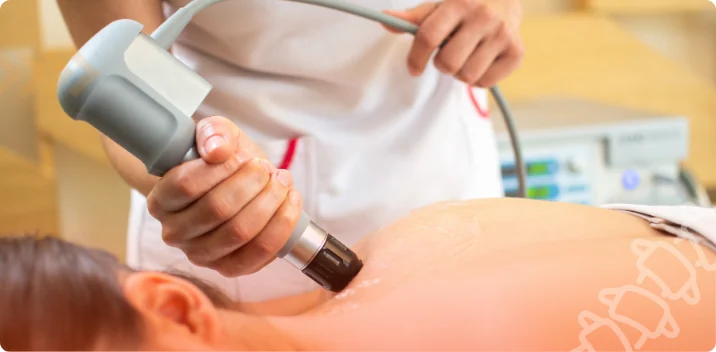
Most people do not hesitate over shockwave therapy because they doubt the science. They hesitate because they cannot picture the room, the device, the sensation or the bill, and nobody likes agreeing to something they cannot see in advance.
This is the practical version. The short mechanism note is that acoustic pulses give stalled tissue a mechanical signal it can no longer generate on its own, and the full tissue-level explanation lives in why acoustic waves change what a stalled tendon does. Everything below is about the visit itself: what happens, who it suits, what it feels like afterwards and what it costs. If you already know your problem is a stubborn tendon, you can skip straight to booking an evaluation for acoustic wave treatment at either office and read the rest afterwards.
What Happens at Your First Shockwave Visit?
The first visit is an exam, not a treatment session by default. We take a history of what started the problem and what provokes it now, test the movements that reproduce your symptom, palpate to find the exact structure involved, and only then decide whether acoustic wave treatment is the right tool for it.
That order is deliberate. Shockwave is depth-specific and target-specific, so treating the general area because it hurts there wastes your money. Dr. Justin Bergin, DC, has spent 22 years working out which structure is actually generating a symptom, and that is the part of the visit that determines whether anything that follows is worth doing.
You will leave the first visit knowing three things: what we think is driving the pain, whether shockwave suits it, and what a course would involve.
What Does a Session Actually Feel Like?
Gel goes on the skin, the applicator sits against the treatment area, and the device delivers rapid pulses that feel like firm, insistent tapping. Sensitive areas feel sharper than tolerant ones. No anesthetic is used, nothing is injected, and you stay dressed except for access to the region being treated.
Intensity is adjustable throughout, and it should be adjusted. A session that you brace against is a session you will avoid repeating, which defeats the purpose. Tell the clinician when the setting crosses from strong into unpleasant.
Sessions are short. You walk in, you walk out, you drive yourself home. The most common description patients give afterwards is that it was louder and stranger than expected, and less painful.
The noise surprises people more than the sensation does. A shockwave handpiece is mechanical, so it clicks and knocks rather than humming, and the sound carries through the room. Nothing is wrong when that happens. Patients who are sensitive to noise usually settle within the first minute once they know what they are listening to, and it is a reasonable thing to mention before the device is switched on rather than after.
One more practical detail. Wear clothing that gives easy access to the area being treated, because gel is used and the applicator needs skin contact. A shoulder or an elbow is simple. A hip or a hamstring is easier in shorts than in jeans.
Who Tends to Be a Good Candidate?
The clearest fit is a soft tissue or tendon problem that has plateaued: months of symptoms, a predictable tender spot, flares tied to specific activities, and simpler measures already tried without lasting change. Heel pain, outer elbow pain, shoulder tendon pain and knee tendon pain are the patterns that come up most.
Heel pain is a useful example. Mayo Clinic describes plantar fasciitis as stabbing pain that is worst with the first steps of the morning, and that recognisable pattern is the kind of mechanical signature shockwave has been tested against. A multicenter randomized placebo-controlled trial in chronic heel pain found greater pain reduction in the treated group than in the placebo group, with no serious adverse events reported.
Candidacy also depends on what else is going on. Shockwave rarely travels alone here, because it sits among the non-surgical regenerative services on one DC-led plan, and a knee that is both tendon-irritated and joint-restricted needs more than one input.
Who Is Generally Not a Fit
Acoustic wave treatment is not appropriate over an area with an active infection, over a known or suspected tumour, over an unexplained lump that has not been imaged, or during pregnancy. It is not used over open growth plates in children, and a significant bleeding disorder or active anticoagulation needs a conversation before anything is scheduled.
Beyond those, there is a category people find harder to hear. Symptoms that are primarily neurological, such as numbness, burning or pain travelling down a limb, usually point somewhere other than the tendon you can press on. Treating the sore spot in that situation spends money on the wrong target.
Sometimes the right answer is that this is not your treatment. A clinic willing to say that is worth more to you than one that is not.
What to Expect in the Days Afterwards
Mild soreness, warmth or redness over the treated area is the usual reaction, and it settles quickly. Reviews of treatment tolerability in plantar heel pain list temporary local reddening as the most frequent complaint, with minor bruising less common. Safety analyses in upper limb tendon conditions likewise report no serious long-term adverse effects.
The soreness is not a setback. Some degree of reaction is consistent with having asked the tissue to respond.
What we do ask is that you avoid loading the treated area hard immediately afterwards, and that you follow the movement guidance you are given between visits. Shockwave opens a window for tissue to tolerate loading again. The loading is what banks the progress.
What Does Shockwave Therapy Cost, and Does Insurance Cover It?
Shockwave therapy here is cash pay. Most plans classify acoustic wave therapy for musculoskeletal pain as non-covered, so we price it openly rather than building a course around a reimbursement that is unlikely to arrive.
The figure depends on the area treated and how many sessions your exam supports, and you get it in writing before you commit. Payment plans are available for self-pay care, and the front desk will tell you which plan fits your course. Coverage varies by plan and by service, and our team checks your specific situation rather than assuming.
If you want a low-stakes way to find out whether any of this applies to you, the new patient offer covers it: Consultation, Exam, X-Rays (If Needed) & Report of Findings: Only $47.
Booking the Visit That Tells You Whether It Fits
Shockwave therapy is worth considering when the story is a stubborn tendon or soft tissue problem that has stopped improving on its own. It is not a general pain treatment, it is not covered by most plans, and it does not suit nerve-driven symptoms. Knowing all three of those before you start is what makes the decision a reasonable one instead of a hopeful one.
The honest next step is small. One exam tells you which structure is producing your symptom and whether acoustic energy is the right way to reach it. If the answer is no, you will hear that, and you will not have spent a course finding out. Book the exam that decides whether shockwave fits at the Lakeland or Lady Lake office, and bring the timeline of what you have already tried.
Ready to take the next step?
Talk with the ChiroMed team about a shockwave therapy plan built around what your examination actually finds.